
A love that would not end
Val'Elaria held every mortal in life. Nothing died. Nothing was allowed to finish. The world began to rot at the edges — and then at the centre.
The world bible
A world where death was refused — and everything has been paying for it since.
The short version
Long before mortal history, twin gods kept the world in balance. Val'Elaria governed life; Val'Lirael governed death. Between them, every mortal was born whole and every mortal was laid down without woe. The blessing said over cradle and grave was the same: “We welcome thee whole, without flaw; we lay thee down without woe.”
Then Val'Elaria refused to let go. No living thing could die. Wounds healed wrong, bodies kept growing, and creatures turned into shapes they were never meant to hold. Mortals — the children she loved — turned to the God of Death and begged for release.
Val'Lirael answered. He killed the corrupted land and sealed it inside the stomach of the world, giving his own body to hold the door shut. The war of the gods ended. The wound did not.
That is the story everyone knows. It is also only half of it.
The unravelling
It was a mother refusing to bury her children.
Val'Elaria held every mortal in life. Nothing died. Nothing was allowed to finish. The world began to rot at the edges — and then at the centre.
Mortals rejected her. They stood beside Val'Lirael and asked for the one thing she would not give: an ending. The God of Life fell.
Her six champions fell defending her. The curse took them too — but they returned near-pure, and became the beings mortals call the 6 Demons of Calamity.
The two churches
The god-war split one creed down the middle. Each church kept its own half and forgot the other.
“All that lives is meant to grow; tend it, and never abandon it.”
Birth, growth, healing, cultivation. Its virtue is nurture; its blind spot is the unexamined step from “tend it” to “never let it end.” Outlawed since the unravelling. Its members are few, careful, and quiet.
Outlawed cult“All that lives is owed a good ending; to withhold it is cruelty.”
Last rites, vigil, grief-keeping, the closing of wars. It holds the truth and gets little for it: a faith of endings in a world that wants to keep going. Respected, and hollowing out.
Fading orthodoxyThe church of endings cannot agree how to end its own argument.
The old houses
Val'Terra's great houses were built around that promise. House Silverborne rose higher than any other — and fell further. Today it holds only Tornstbell, the port city where our first dark adventure begins. What the family promised to get there is the story's business.
The houses are not decoration. They hold land, debt, old marriages, and older grudges — and every one of them has something buried that was supposed to stay buried.
Where the stories happen
Every adventure opens a different door into the same world.
A small port city on the western coast, where the Adventurers' Guild keeps a thin presence and the streets have gone quiet.
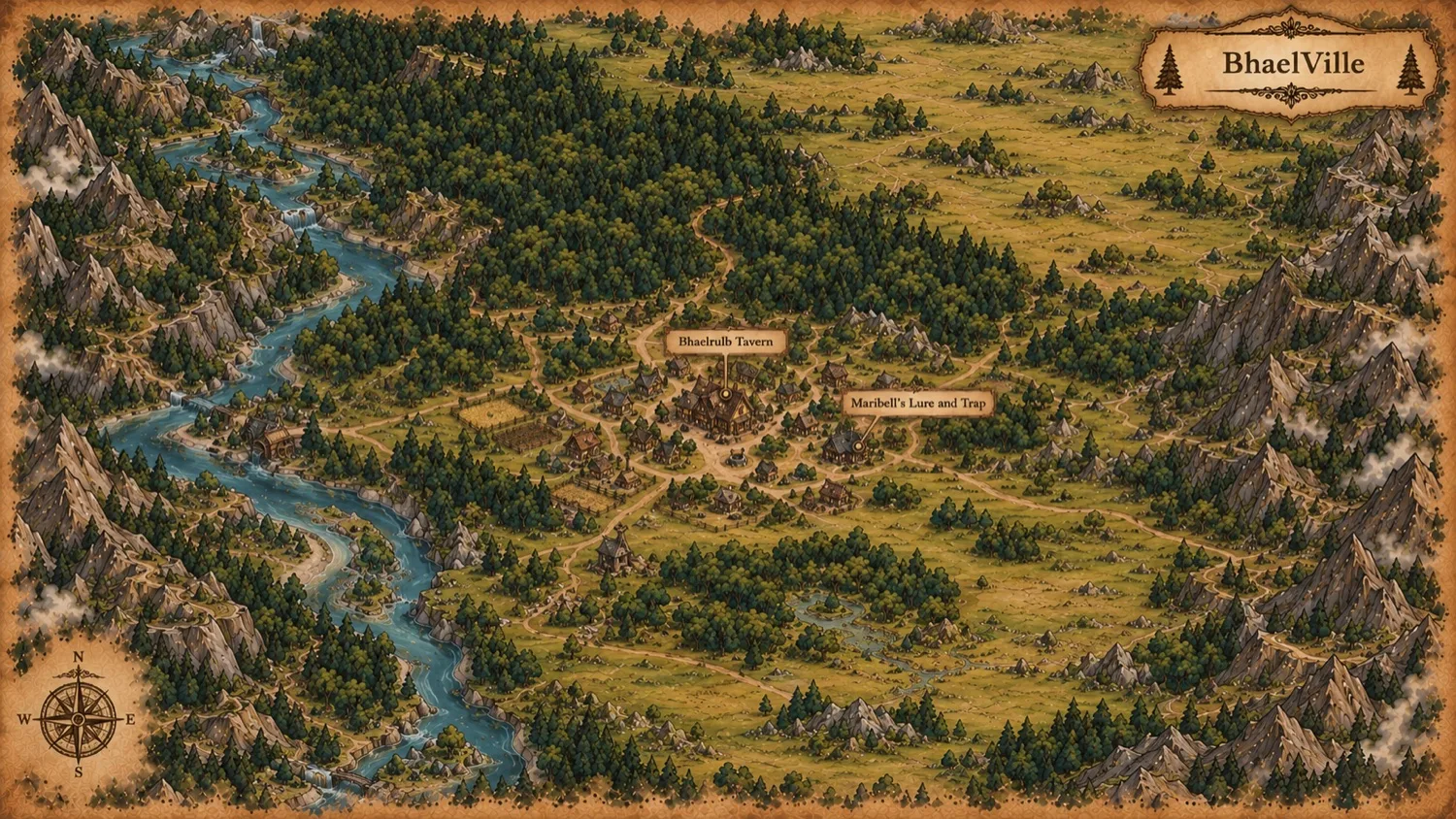
A village halfway along the road to the capital: one tavern, one well, one blacksmith, and a forest that keeps its own counsel.
The seat of the crown. A city of courts, old stone, and more history than it tells.
The timeline
The twin gods keep the world in balance. One creed, two halves, said over every cradle and every grave.
Val'Elaria refuses death. Nothing can end. The world begins to rot at the edges, then at the centre.
Mortals side with Val'Lirael. The God of Life falls. Where her body rests, the land is poisoned; her heart buds the Heart-Tree.
Val'Lirael gives himself to swallow the corruption. The barrier unmakes any denizen that crosses it.
One truth each. The seal holds. The demons wait. The God of Death does not answer.
A mine outside Tornstbell has been cleared from the inside. A village well has gone foul. A seal is a promise, not a wall.
The through-line
Nothing here is a one-off setting. Every Gobboco story is another door into the same canon — and the canon keeps growing.